Which Storage Areas Should Be Open, Closed or Concealed?
Storage affects how easily household items can be accessed, organised and kept out of sight. Open, closed and concealed storage each serve different purposes, so the appropriate option depends on what is being stored, how often it is used and where the storage is located.
That said, during space planning, an interior design company in Singapore may consider storage alongside circulation, available wall space and everyday household activities. Understanding the differences between storage types can also help homeowners make practical decisions before cabinetry and other built-in elements are finalised.
Which Areas of the Home Work Best With Open Storage?
Open storage includes shelves, racks, cubbies and other storage areas without doors or enclosed fronts. It provides direct access and keeps stored items visible, making it particularly useful for frequently used belongings.
Areas that can benefit from open storage include:
- Kitchens: Open shelves or racks can keep regularly used cookware, utensils or ingredients within reach. Items exposed to cooking grease and moisture may require more frequent cleaning.
- Living rooms: Shelving can hold books, media equipment and selected everyday objects. Limiting the number of visible items can make the shelves easier to organise.
- Home offices: Open shelves can provide quick access to books, folders and work supplies that are used regularly.
- Entryways: Open compartments can accommodate shoes, bags or other items that need to be accessed when entering or leaving the home.
- Wardrobes: Open sections can be useful for frequently worn clothing and accessories, provided that visibility and dust exposure are acceptable.
Open storage generally works best where accessibility is more important than hiding contents. However, because everything remains visible, it requires regular organisation and cleaning.
Which Areas of the Home Work Best With Closed Storage?
Closed storage uses cabinet doors, drawers and other solid fronts to separate stored items from the surrounding room. It can reduce visible clutter while providing some protection from dust and everyday contact.
Closed storage is particularly practical in areas containing many small or visually inconsistent items:
- Kitchens: Cabinets and drawers can hold cookware, appliances, food containers and utensils that do not need to remain visible.
- Bedrooms: Wardrobes and drawer units provide enclosed space for clothing, bedding and personal belongings.
- Bathrooms: Cabinets can organise toiletries, towels and cleaning supplies. Materials used in humid areas should be appropriate for the conditions.
- Living rooms: Closed cabinetry can accommodate electronics, cables, documents and household items that may otherwise create visual clutter.
- Utility areas: Cleaning equipment, laundry products and general supplies can be kept organised behind doors.
Closed storage therefore provides a balance between accessibility and visual separation. It is useful when items need to remain relatively easy to reach but do not need to form part of the visible interior.
Which Areas of the Home Benefit Most From Concealed Storage?
Concealed storage is designed to be less visually obvious than conventional cabinets or shelves. It may be incorporated into platforms, benches, wall systems, furniture or other built-in elements.
This approach can be useful where floor area is limited or where storage needs to share space with another function. Common locations include:
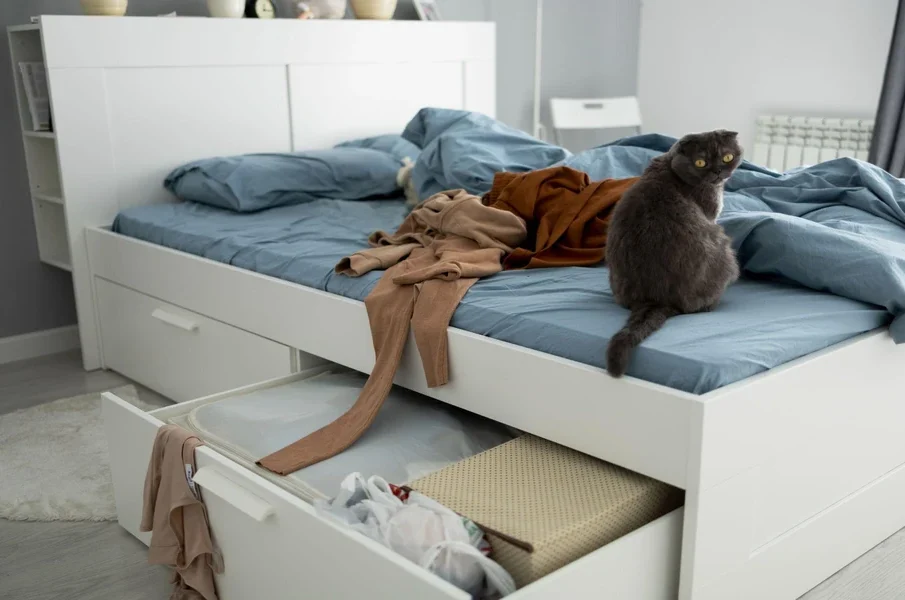
- Under beds: Drawers or lifting platforms can store bedding, seasonal clothing and less frequently used items.
- Entryway benches: Seating can incorporate compartments for footwear, bags or accessories.
- Living-room furniture: Window seats, benches and built-in units can include storage within their structure.
- Raised platforms: Where appropriate to the room design, platforms may incorporate compartments beneath the usable surface.
- Full-height wall systems: Storage doors can be integrated with surrounding panels to create a more continuous wall surface.
Concealed storage can improve space efficiency, but access should remain practical. Items used several times each day may be better placed in open or conventional closed storage rather than behind multiple panels or movable components.
How Should You Choose Between Open, Closed and Concealed Storage?
No single storage type is suitable for every part of a home. Choosing between them requires consideration of accessibility, visibility, available space and the characteristics of the stored items.
A practical assessment can consider:
- Frequency of use: Everyday items generally need easier access than seasonal or occasional belongings.
- Visibility: Decorative or regularly referenced items may suit open storage, while miscellaneous belongings may be better behind doors.
- Cleaning: Open shelves collect dust and require more regular surface cleaning than enclosed cabinets.
- Available space: Built-in and concealed solutions can make use of areas that standard freestanding furniture may not utilise efficiently.
- Room conditions: Storage in kitchens and bathrooms should account for factors such as moisture, heat and cleaning requirements.
- Accessibility: Storage should be positioned so intended users can retrieve items without unnecessary difficulty.
That said, when assessing the best interior design firm in Singapore for a storage-focused project, homeowners can examine how proposed layouts address these practical considerations rather than considering appearance alone.
Remember, in many homes, the most functional approach is a combination of all three types. Open storage supports quick access, closed storage keeps everyday belongings organised, and concealed storage can make use of less obvious areas.
Partner with Jialux Interior to plan the right mix of open, closed and concealed storage around what you use, what you want within reach and what you prefer out of sight.