Before You Flip the Switch: A Heating Season Safety Briefing
Introduction
In Southern California, it is easy to forget about the furnace. It sits idle for most of the year, and when the first cold evening arrives, the thermostat goes up and everyone assumes it will simply work. That first start of the season is exactly when problems show up. The team at Pipeline Plumbing Heating & Air handles heating alongside plumbing and air conditioning, and the most important advice they can give any homeowner is this: treat the first cold week as a safety checkpoint, not just a comfort upgrade. This briefing covers what to check, what to expect, and when to stop and call a professional.
Why Mild Winters Still Carry Risk
Fuel Burning Equipment Is Fuel Burning Equipment
A gas furnace works the same way in Fullerton as it does in Minnesota. It burns fuel, and burning fuel produces carbon monoxide. According to the CDC, carbon monoxide is an odorless, colorless gas that kills without warning, and gas and oil burning furnaces are among the household items that produce it. The agency reports that each year more than 400 Americans die from unintentional carbon monoxide poisoning not linked to fires, more than 100,000 visit an emergency department, and more than 14,000 are hospitalized.
Why the First Weeks Matter Most
A furnace that has been off for months can collect dust, develop blocked vents, or have components that wore out while idle. Running it for the first time is when those problems are most likely to appear.
The First Start of the Season
What Is Normal
- A light dusty or warm smell for a short time as dust burns off
- Some air movement and mild clicking as the system cycles on
- Warm air from the vents within a few minutes
What Is Not Normal
- A strong or persistent burning smell
- Loud banging, grinding, or squealing
- Short cycling, where the furnace turns on and off repeatedly
- Soot, rust, or moisture around the unit or vents
- A yellow or flickering burner flame, instead of a steady blue one
- Cold air, or no air, from the vents
If you notice anything on the second list, turn the system off and have it inspected before using it again.
Carbon Monoxide Basics
Know the Symptoms
The CDC lists the most common symptoms as headache, dizziness, weakness, upset stomach, vomiting, chest pain, and confusion, often described as flu-like. The agency also warns that people who are sleeping, or who are under the influence of other substances, can die from carbon monoxide poisoning before they ever have symptoms. That is why detectors matter so much.
Who Is Most at Risk
Everyone is at risk, but the CDC says infants, older adults, and people with chronic heart disease, anemia, or breathing problems are more likely to become ill.
Detector Placement and Care
Where to Install Them
The CDC advises installing battery-operated or battery backup carbon monoxide detectors near every sleeping area in the home. A detector hidden in a basement or garage will not wake someone in a bedroom.
How to Keep Them Working
- Check the batteries when you change your clocks each spring and fall. The CDC’s current guidance specifically reminds people to do this at the fall time change.
- Replace the detector following the manufacturer’s instructions or every five years. Set a calendar reminder on the day you install it.
- Consider a model with a digital readout, which can show the highest carbon monoxide level recorded in your home as well as sounding an alarm.
If the Alarm Sounds
Do not assume it is a false alarm. Get everyone, including pets, out of the house into fresh air and call 911 from outside. Do not go back in until emergency responders say it is safe.
The Annual Service Visit
What the CDC Recommends
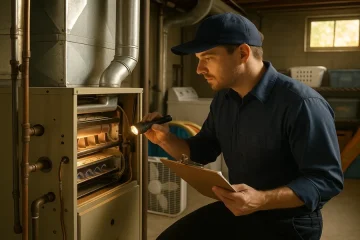
The agency recommends having your heating system, water heater, and any other gas, oil, or coal burning appliances serviced by a qualified technician every year. This is one of the most effective ways to prevent a problem rather than react to one.
What a Good Visit Typically Covers
- Inspecting the burners, ignition, and heat exchanger
- Checking venting and flue connections for blockages or leaks
- Testing safety controls and the thermostat
- Cleaning or replacing the filter
- Checking the water heater and other gas appliances at the same time
Venting Matters
The CDC notes that gas appliances must be vented properly. For example, horizontal vent pipes on a water heater should rise slightly as they head outdoors, which helps prevent carbon monoxide from leaking if joints or pipes are not tight.
Simple Things You Can Do Yourself
Homeowner Checklist
- Replace or clean the furnace filter on schedule
- Keep the area around the furnace and water heater clear of boxes, paint, and anything flammable
- Make sure vents and registers are open and unblocked
- Replace thermostat batteries if your model uses them
- Vacuum dust from vents and the area around the unit
Heating Habits to Avoid
Unsafe Shortcuts
The CDC is clear about several practices that put families at risk:
- Never heat your house with a gas oven
- Never burn charcoal indoors, in any form
- Never use a portable gas camp stove or flameless chemical heater indoors
- Do not cook or burn anything in a stove or fireplace that is not vented
- Have your chimney checked or cleaned every year, since debris can block it
Power Outages and Generators
If a storm knocks out power, never run a portable generator inside the house or garage, even with the doors open. The CDC says to operate it outdoors, more than 20 feet from windows, doors, and vents, and to keep a battery powered or battery backup carbon monoxide detector inside.
When to Call a Professional
Do Not Wait If You See These Signs
- The furnace does not start, or shuts down shortly after starting
- The burner flame is yellow or orange instead of blue
- Soot or rust appears near the furnace or flue
- Members of the household have headaches, dizziness, or nausea that improve when they leave the house
- The pilot light keeps going out
- Your heating bill jumps with no change in habits
For anything involving gas smells or a suspected leak, leave the house first and call the gas company or emergency services from outside.
Winter Readiness Checklist
Do This Week
- Test every carbon monoxide and smoke detector, and replace batteries
- Replace the furnace filter
- Clear the area around the furnace and water heater
- Run the heater through a full cycle and listen for anything unusual
Schedule Soon
- A professional furnace inspection and tune up
- A check of the water heater and its venting
- A chimney inspection if you use a fireplace
Conclusion
A furnace can make a house feel safe and warm, but it only stays that way when it is maintained and when you have working detectors in the right places. Use the first cold snap as a reminder to check the system, service it every year, and take any warning sign seriously. A short inspection now is far easier than dealing with a breakdown or a safety emergency in the middle of winter.