
Floating docks are one of those things that seem simple at first. They sit on the water, move up and down, and give people a stable place to walk, tie up a boat, or enjoy the shoreline. But once you understand how they actually work, you start to see why they are such a smart choice for many waterfront properties.
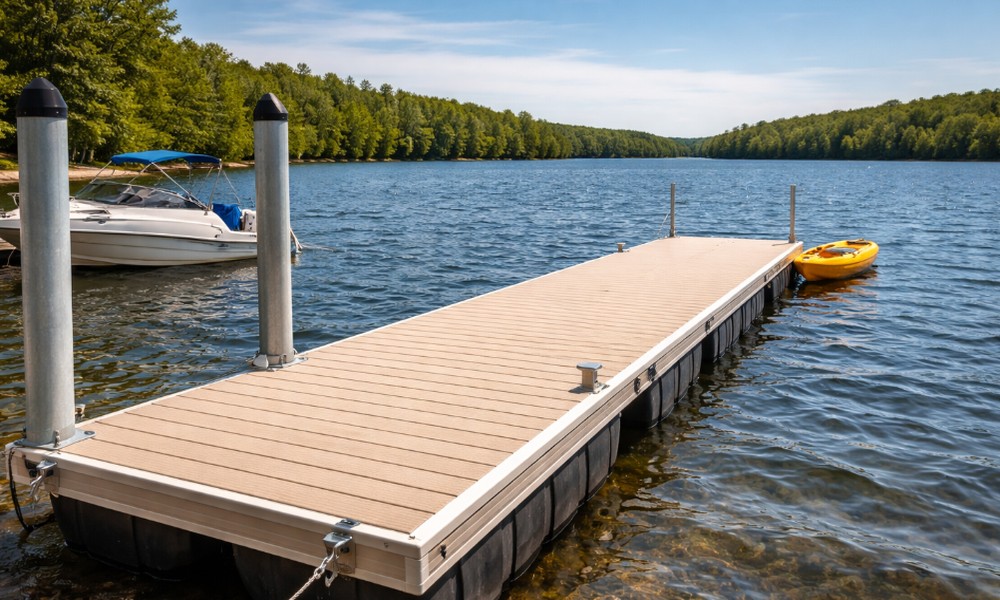
At the most basic level, a floating dock works by using buoyancy. That means the dock is supported by air-filled flotation units, often called floats, mounted underneath the frame. These floats displace water and create upward force, which keeps the dock above the surface. As water levels rise and fall, the dock rises and falls with them. That is really the main reason people choose floating docks in the first place.
Unlike a fixed dock, which stays in one place at one height, a floating dock adjusts with changing conditions. If the tide comes in, the dock lifts. If the water drops, the dock lowers with it. That flexibility makes floating docks especially useful in areas with changing water levels, wave action, seasonal flooding, or reservoirs that do not stay at the same height year-round.
The frame of the dock gives it structure. In many cases, the frame is made from materials like aluminum, treated wood, or other corrosion-resistant materials designed for marine use. The frame supports the decking on top and connects to the flotation system underneath. The decking is the walking surface people actually use, and it can be made from wood, composite boards, or other slip-resistant materials depending on the project.
What keeps the dock from drifting away is the anchoring system. This is a part people do not always think about, but it matters a lot. A floating dock still needs to stay in position even though it moves vertically with the water. That is usually done with guide piles, anchored cables, stiff arms, or other connection systems that hold the dock in place while still allowing it to rise and fall. The right anchoring method depends on the shoreline, water depth, bottom conditions, and how much movement the dock is expected to handle.
That balance between movement and control is what makes a floating dock work so well. It is not floating freely like a raft. It is designed to move where it should and stay where it should.
Another important part of how floating docks work is weight distribution. A dock needs to stay level and stable, even when people are walking on it, gear is being loaded, or a boat is tied alongside. That is why proper float placement is important. If the floats are poorly spaced or undersized, the dock may tilt, sag, or feel unstable. A well-built floating dock spreads the load evenly and maintains enough freeboard, which is the height between the deck and the waterline, to stay practical and safe.
Floating docks also perform well because they can absorb movement better than rigid systems. When small waves or wakes roll through, the dock moves with the water instead of fighting against it. In many locations, that reduces stress on the structure over time. It can also make boarding a boat easier because the dock stays closer to the boat’s level than a fixed dock would.
Of course, floating docks are not one-size-fits-all. The size of the dock, the type of floats, the decking material, and the anchoring system all need to match the site. Water conditions, intended use, and local weather patterns all play a role. A dock for a quiet residential shoreline may be very different from one built for a marina or a high-traffic waterfront.
In the end, understanding how floating docks work comes down to a few key ideas: flotation, structure, anchoring, and balance. When those parts are designed correctly and installed properly, a floating dock becomes a reliable, practical solution that adapts to the water instead of working against it. And honestly, that is what makes it such a smart waterfront investment.
This post was written by a professional at Supreme Marine Floating Docks. Supreme Marine Floating Docks is dedicated to providing top-quality floating dock Palm Beach and marine accessories that combine durability, innovation, and superior performance. While we are a new brand, our team brings over 50 years of combined industry experience, making us a trusted name in the marine world. We are passionate about designing and delivering products that meet the highest standards, ensuring reliability and longevity in all marine environments. Whether for residential, commercial, or recreational use, our docks are crafted with precision and care, setting a new benchmark in the industry. At Supreme Marine, we don’t just build docks-we create lasting solutions.