What Your Home Water Pressure Is Telling You
Most people only think about water pressure when something goes wrong. The shower dribbles, the dishwasher fills slowly, or a faucet sprays harder than it should. But water pressure is also a quiet health indicator for your whole plumbing system. A single number on a small gauge can reveal leaks you cannot see, pipes that are wearing out, and fixtures that are being pushed harder than they were designed to handle. Here is how to take the reading and what each range means.
How to measure your pressure
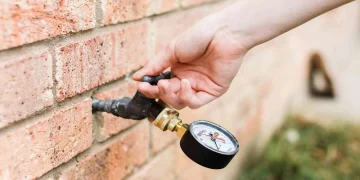
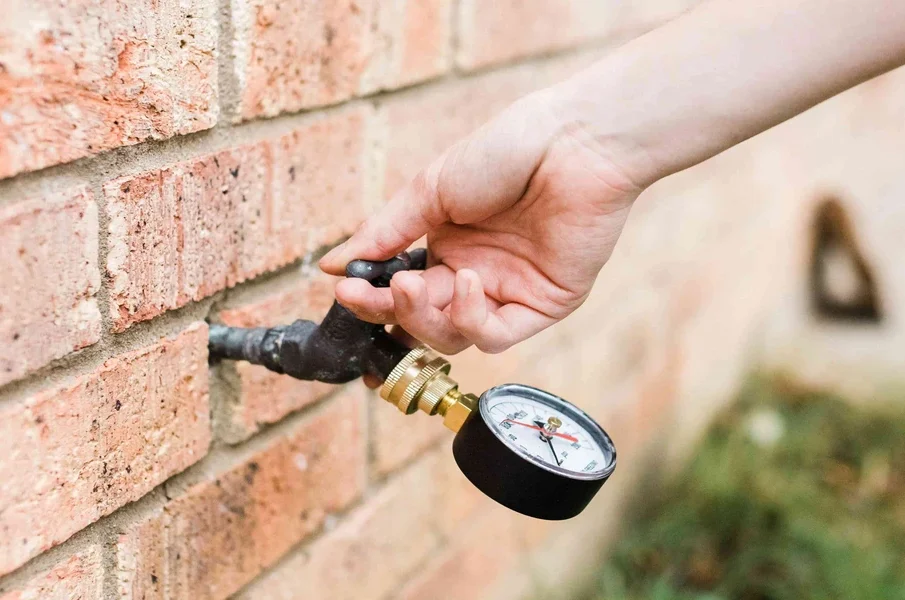
You do not need special skills to check it. A water pressure test gauge costs little at a hardware store and screws onto an outdoor hose bib. The EPA’s WaterSense program explains in its home maintenance guidance that you should turn off all water using fixtures and systems in the house, attach the gauge to the hose bib, and open the water fully. It says fixtures work best when incoming pressure sits between 45 and 60 pounds per square inch, or psi.
Take the reading at a few different times of day, since pressure can rise at night when neighborhood demand drops. Some gauges have a needle that holds the highest value, which is useful for catching spikes while you are away.
When the reading looks wrong, call a licensed plumber
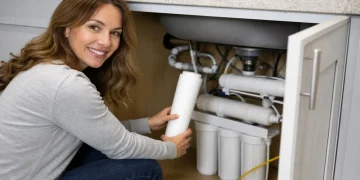
If the number is outside the healthy range, a professional can find the cause instead of guessing. A licensed company such as Smooth Waters Plumbing can test pressure at several points, inspect the pressure reducing valve, look for hidden leaks, and explain what needs repair. Ask them to show you the readings and explain how they reached their conclusion, and request a written estimate that separates diagnosis from repairs.
Bring your own readings and notes about when the problem appears. Details like “the pressure drops when the dishwasher runs” or “the pipes bang when the washing machine shuts off” help narrow down the cause fast.
Under 40 psi: low pressure
Pressure that is well below the healthy range makes showers weak and fixtures slow. EPA notes that if service pressure is much lower than 45 psi, you may need to find and fix a leak in your home. Other common causes include clogged aerators and showerheads, partly closed shutoff valves, mineral buildup or corrosion inside older pipes, a failing pressure regulator, or a supply problem on the utility side.
Start with the simple checks. Unscrew a faucet aerator and look for debris, make sure the main shutoff valve is fully open, and see whether the problem affects one fixture or the whole house. If every tap is weak, or the water meter keeps moving when everything is off, call a plumber, since that pattern can mean a leak.
45 to 60 psi: the healthy zone
This is the range to aim for. Faucets, showers, toilets, and appliances are designed to work comfortably in it, and your pipes and connections are under reasonable stress. If your reading falls here, you are in good shape. Note the number and check again once or twice a year, because pressure can drift as parts age.
60 to 80 psi: creeping high
Many homes sit in this zone without anyone noticing. Everything seems to work, even better than expected, but the system is under constant extra strain. Over time, faucets start to drip, supply hoses wear out, and connections loosen. Fixtures such as water heaters, dishwashers, and ice makers can be especially sensitive to pressure at the upper end of this range.
EPA suggests that when pressure is much higher than normal, you may want to have a professional adjust or install a pressure reducing valve to hold it at 60 psi. If your home already has a valve, it may simply need adjusting or replacing, since these valves wear out over time.
Above 80 psi: act soon
A reading in this range deserves prompt attention. Constant high pressure can cause banging pipes, running toilets, leaking fixtures, failed supply lines, and early appliance failure, and in the worst case a burst pipe and serious water damage. Reducing pressure also tends to cut water use, because fixtures deliver more water at higher pressure than you need.
A plumber can install or replace a pressure reducing valve, and in many homes also check whether an expansion tank is needed. Once a pressure regulator is installed, water that expands as it heats has nowhere to go, so the expansion tank protects the system. Ask your plumber whether that applies to your setup.
What to do with your reading
Think of the gauge as a free diagnostic tool. Take a reading now, write it down along with the date, and compare it against the ranges above. If you are in the healthy zone, a yearly check is plenty. If you are below it, look for clogs, closed valves, and leaks before assuming something worse. If you are above it, do not wait for a failure, because a pressure reducing valve costs far less than a flooded room.
Whatever you find, keep a record of readings, repairs, and receipts in one place. Good records help any plumber diagnose faster, and they give you a baseline to measure against in the future. A few minutes with a ten dollar gauge can protect your pipes, your appliances, and your floors, and it gives you a clear, concrete reason to call a professional when the numbers say it is time.