
The Reasons Why Some Air Conditioning Systems Operate More Quietly
Key Takeaways
- Air conditioning noise is influenced by equipment design, component quality, installation, maintenance, and the surrounding environment.
- Compressors, fans, motors, refrigerant flow, and moving mechanical components can all contribute to operating noise.
- Correct installation helps limit vibration and prevents components such as pipework and ductwork from transmitting unnecessary sound.
- Regular maintenance can prevent dirt, wear, loose components, and airflow restrictions from increasing noise over time.
- Building layout and equipment location affect how much operating sound occupants actually hear.
Introduction
Air conditioning systems inevitably produce some sound while operating. Compressors, fans, motors, refrigerant movement, and airflow all create noise to varying degrees, but equipment design and installation can determine how noticeable these sounds become.
Noise levels can therefore be an important practical consideration when planning an aircon purchase in Singapore, particularly for bedrooms, offices, meeting rooms, hotels, and other spaces where excessive background noise may be disruptive. Understanding why some systems operate more quietly can also help distinguish normal operating sounds from potential mechanical or installation problems.
1. How Does Air Conditioning Equipment Design Affect Noise Levels?
Equipment design is one of the main factors determining how much sound an air conditioning system produces. Manufacturers can use different compressor technologies, fan designs, motor controls, insulation materials, and cabinet structures to manage vibration and operating noise.
For example, inverter-driven systems can adjust compressor and fan output according to cooling demand instead of operating only at full capacity and switching repeatedly between on and off states. At lower loads, reduced operating speeds can result in lower sound levels.
Other design characteristics that can influence noise include:
- Fan blade shape and rotational speed
- Compressor mounting and vibration isolation
- Motor design and speed control
- Sound insulation around mechanical components
- Indoor unit casing construction
- Air outlet and grille design
The outdoor unit is particularly important because the compressor is a significant source of mechanical sound. The level and character of aircon compressor noise depend on factors including compressor type, operating load, mounting, and equipment condition.
Overall, quieter operation begins with equipment designed to control vibration, airflow sound, and mechanical noise at their sources.
2. Can Installation Quality Affect Air Conditioner Noise?
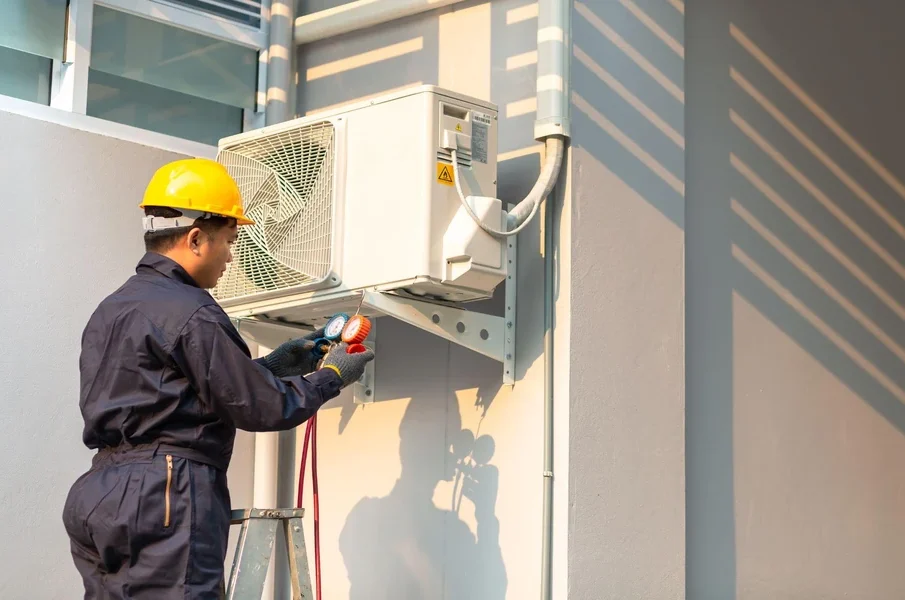
Even equipment designed for low-noise operation may become noticeably louder when installed incorrectly. Poor mounting, insufficient clearances, loose connections, or unsuitable pipework arrangements can allow normal mechanical vibrations to transfer into walls, floors, ceilings, or other building elements.
Common installation-related sources of unwanted noise include:
| Installation issue | Possible noise effect |
| Loose mounting | Rattling or vibration |
| Poorly supported pipework | Buzzing or transmitted vibration |
| Restricted airflow | Increased airflow or fan noise |
| Poor outdoor-unit positioning | More noticeable compressor sound |
| Improper duct installation | Airflow noise or vibration |
Outdoor units also require appropriate positioning and secure support. Installing them close to reflective surfaces or occupied areas can make aircon compressor noise more noticeable even when the equipment itself is functioning normally.
Installation quality therefore works together with equipment design. Correct mounting, adequate clearance, appropriate pipe support, and proper airflow paths help the system operate closer to its intended sound level.
3. How Does Regular Maintenance Help Keep Air Conditioning Systems Quiet?
Air conditioning systems can become louder as components accumulate dirt or experience normal wear. Filters, coils, fans, bearings, fasteners, and other parts can influence both airflow and mechanical sound.
Maintenance may address several common causes of increasing noise:
- Dirty filters that restrict airflow
- Dust accumulation on fan components
- Loose screws, panels, or mounting points
- Worn moving components
- Blocked or restricted airflow paths
- Debris around outdoor equipment
For example, restricted airflow may require the fan to work under less favourable conditions, while loose panels can vibrate during operation. Unusual grinding, rattling, knocking, or persistent changes in sound can also indicate a condition that requires inspection rather than simply being a normal characteristic of the system.
Regular servicing therefore supports quieter operation by keeping components clean, secure, and functioning as intended.
4. How Do Building Conditions and the Operating Environment Affect Aircon Noise?
The same air conditioning system can sound different depending on where it is installed. Room dimensions, wall and ceiling materials, equipment location, surrounding structures, and background noise all affect how sound travels.
Hard surfaces such as concrete, glass, and tiles can reflect sound, while enclosed spaces may make mechanical noise more noticeable. Outdoor units positioned near walls, corners, windows, or enclosed service areas may also produce sound that reflects towards occupied spaces.
Operating conditions matter as well. A system working under higher cooling demand may run its compressor and fans at higher output than it would under lighter conditions, potentially changing the amount of sound produced.
Due to this reason, an aircon purchase should consider more than the equipment’s published sound rating. Equipment placement, room acoustics, mounting conditions, and expected cooling loads all influence perceived noise after installation.
In summary, quiet operation depends on the interaction between the air conditioning equipment and its surroundings, rather than on a single component alone.
Frequently Asked Questions
Why is my air conditioner louder than another unit of the same type?
Differences in installation, maintenance condition, operating load, mounting, and room acoustics can cause similar systems to sound different.
Is compressor noise normal in an air conditioner?
Some compressor sound is normal because the compressor is a mechanical component. A sudden or significant change in sound, however, may justify professional inspection.
Can a dirty air conditioner become noisier?
Yes. Restricted airflow, dirty fan components, loose panels, and accumulated debris can contribute to increased operating noise.
Do inverter air conditioners operate more quietly?
They can operate more quietly during periods of lower cooling demand because compressor and fan speeds can be adjusted rather than always running at maximum output. Actual noise levels still depend on the specific equipment and installation.
Visit Airple and gain recommended solutions that match your cooling and acoustic needs.