

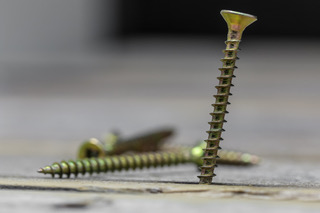
You rarely notice the moment when materials begin to trust each other. That trust forms quietly through engineering choices made long before assembly begins.
In furniture, fixtures, and medical interiors, bonds decide lifespan and daily reliability. The smallest connector often controls the greatest structural outcome.
Wood screws hold this responsibility with remarkable discipline and restraint. Their role extends beyond joining surfaces into shaping safety, stability, and long-term performance.
How Wood Screws Influence Structural Health and Load Integrity
You deal with environments where movement, pressure, and vibration challenge material harmony every day. Technical fastening principles referenced at https://www.starfastenersplus.com/ often highlight this mechanical responsibility clearly.
Wood screws manage these forces by creating controlled tension across fibres and adjoining metals. This principle becomes critical in healthcare fit outs, rehabilitation furniture, and laboratory infrastructure.
- You achieve predictable load distribution without stressing surrounding material grain.
- You reduce micro movement that often leads to joint fatigue or early failure.
- You preserve alignment integrity during temperature or humidity changes.
- You support repeated sanitisation without loosening over time.
Each point reflects mechanical behaviour rather than product promotion. This understanding explains why specification errors cause long term instability in sensitive environments.
Why Wood Screws Determine Longevity in Mixed Material Applications
You often connect timber to steel, aluminium, or composite substrates in controlled interiors. That connection succeeds only when threading geometry respects both material responses.
Wood screws act as translators between organic expansion and metallic rigidity. Their shank design absorbs stress without transferring it to surface joints. You gain durability through engineering logic, not fastening force alone. Such balance protects surfaces used by patients, clinicians, and support staff daily.
Precision Matters When Wood Screws Are Chosen for Critical Environments
You should never treat selection as a hardware decision alone. In healthcare spaces, fastening affects hygiene control, vibration tolerance, and maintenance cycles. Wood screws support these demands when selected with attention to thread depth and head profile.
Correct pairing prevents surface cracking and metal distortion during long term use. You maintain silent performance where noise or movement causes discomfort. These outcomes support wellbeing indirectly through stable physical environments.
Conclusion
You depend on connections that perform quietly for years without intervention. Wood screws deliver that reliability through disciplined engineering, not visible strength. When chosen with intent, they protect structures, users, and environments simultaneously.


