How Tree Restoration Preserves the Health of Mature Trees
Mature trees are not just big plants in the yard. They are living parts of the property. They give shade, soften the heat, protect soil, support wildlife, and make a landscape feel settled. A young tree can look nice, of course, but an old tree has a presence that is hard to replace.
As an arborist, I often look at mature trees a little differently than most people do. A homeowner may see a large oak, maple, pine, or elm and think, “It has been here forever, so it must be fine.” Sometimes that is true. But mature trees can also hide stress for a long time before the damage becomes obvious.
That is where tree restoration comes in. Tree restoration is the process of helping a stressed, damaged, or declining tree regain better health, structure, and stability. It is not always about making the tree look perfect. Actually, that is rarely the goal. The real goal is to preserve the tree safely and give it the best chance to keep growing.
What Is Tree Restoration?
Tree restoration is a careful approach to improving the health of an existing tree, especially one that has value because of its size, age, location, or history. It may include pruning, soil care, root zone protection, pest checks, disease management, watering plans, structural support, and long-term monitoring.
A mature tree does not respond the same way a young tree does. You cannot treat it roughly and expect fast recovery. Older trees heal slower. Their root systems are wider. Their branches may carry more weight. Their bark may already have wounds from storms, construction, lawn equipment, or past poor pruning.
So tree restoration needs patience. It is more like helping the tree recover in stages instead of forcing quick changes.
Why Mature Trees Need Special Care
Mature trees have already survived years of weather, drought, soil changes, and sometimes human damage. But that does not mean they are unbreakable.
Common problems I see in mature trees include:
- Compacted soil around the roots
- Dead or weak branches
- Poor pruning cuts from years ago
- Root damage from digging or construction
- Fungal growth near the trunk
- Pest problems
- Cracks in large limbs
- Water stress
- Girdling roots
- Soil that lacks nutrients
Some of these problems look small at first. A dead branch here. Thin leaves there. Maybe mushrooms near the base. But these signs can point to bigger issues inside the tree or underground.
The hard part is that most of a tree’s health begins below the soil. If the roots are stressed, the canopy usually shows it later.
How Pruning Helps Restore Tree Health
Pruning is one of the most common parts of tree restoration, but it has to be done correctly. Mature trees should not be over-pruned. Removing too much at once can shock the tree and reduce its ability to make food through its leaves.
Good restoration pruning usually focuses on removing dead, diseased, damaged, or rubbing branches. It may also reduce weight on heavy limbs or improve airflow through the canopy.
The goal is not to strip the tree bare. A mature tree needs its leaf surface. Leaves are how the tree feeds itself. So every cut should have a reason.
Bad pruning, like topping, can cause long-term damage. It may create weak regrowth, open wounds, and stress that invites pests or decay. I always tell people, if the pruning looks too aggressive, it probably is.
Soil Care Is A Big Part Of Tree Restoration
A lot of tree problems begin in the soil. Mature trees need healthy soil with enough oxygen, moisture, and space for roots to function.
When soil becomes compacted, roots struggle to breathe and absorb water. This often happens in yards with heavy foot traffic, parked vehicles, construction activity, or repeated mowing close to the trunk.
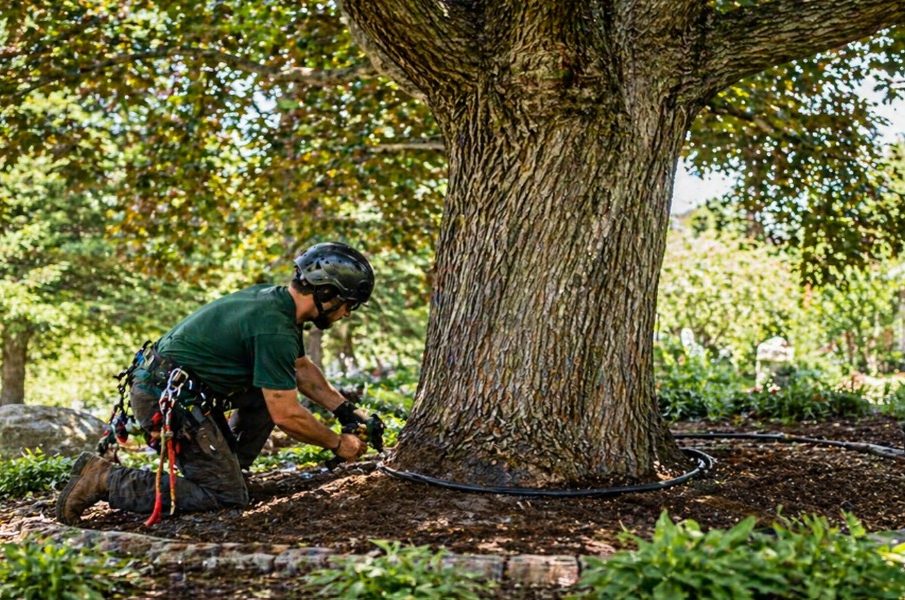
Tree restoration may include mulching, soil aeration, compost, or improving drainage. Mulch is simple, but it helps a lot when done right. A wide mulch ring protects roots, holds moisture, and reduces mower damage.
But mulch should not be piled against the trunk. That “mulch volcano” look is bad for trees. It can trap moisture against the bark and lead to rot or insect problems. Keep mulch a few inches away from the trunk and spread it outward.
Protecting The Root Zone
The root zone is one of the most important areas to protect. Many people think tree roots grow straight down, but most roots spread outward near the surface. Some roots can reach far beyond the canopy.
This means digging, trenching, driveway work, patio installation, or heavy equipment can injure a mature tree even if the trunk is untouched.
Tree restoration often includes setting limits around the root zone. This may mean avoiding soil changes, keeping heavy equipment away, and preventing repeated disturbance. If construction is planned near a mature tree, it is better to protect the tree before work begins, not after damage appears.
Managing Pests And Disease
Pests and disease can weaken mature trees, especially when the tree is already stressed. A healthy tree can often defend itself better. A stressed tree has fewer resources.
Signs of pest or disease issues may include holes in bark, sawdust-like material, sticky residue, leaf spots, early leaf drop, thinning canopy, or unusual growths on branches and trunk.
Tree restoration does not always mean heavy treatment. Sometimes improving water, soil, and pruning is enough to help the tree recover. Other times, a targeted treatment may be needed. The important thing is to identify the actual issue before doing anything.
Guessing can waste time and make things worse.
Structural Support For Weak Limbs
Some mature trees develop heavy branches, weak unions, cracks, or uneven growth. If a tree has valuable structure but certain limbs are at risk, support systems may help.
Cabling or bracing can reduce stress on weak parts of the tree. It does not make the tree indestructible, and it does not replace pruning or monitoring. But when used properly, it can help preserve mature trees that might otherwise be removed too soon.
This work should be done carefully because the wrong support system can harm the tree or create a false sense of safety.
When Tree Restoration Makes Sense
Tree restoration makes sense when the tree still has strong value and a fair chance of recovery. Not every mature tree can or should be saved. That may sound a little harsh, but safety matters.
A tree with severe decay, major root failure, a split trunk, or a high risk of falling may not be a good restoration candidate. But many mature trees are removed too early because people see decline and assume the tree is finished.
A proper inspection can help decide whether restoration is realistic.
Final Thoughts
Tree restoration preserves mature trees by supporting their health from the roots to the canopy. It uses careful pruning, soil care, root protection, pest management, and sometimes structural support to help the tree keep living safely.
A mature tree took decades to grow. Replacing it is not simple. A new tree may be helpful, but it will not offer the same shade, beauty, or environmental value right away.
With the right care, many older trees can stay strong for years. Not perfect, maybe. But healthy, stable, and still worth keeping.
This post was written by a professional arborist at Tree Service Company Clearwater FL. Robert Miller is the owner of Arbor Wise Professional Tree Care, a locally owned and operated tree service company that offers superb lawn care by the most experienced Arborists. Arborwise Tree Services is a tree removal company that offers stump removal, tree pruning, stump grinding, fertilization, and tree restoration. We have an extraordinary lawn care industry notoriety covering the Pinellas county area.